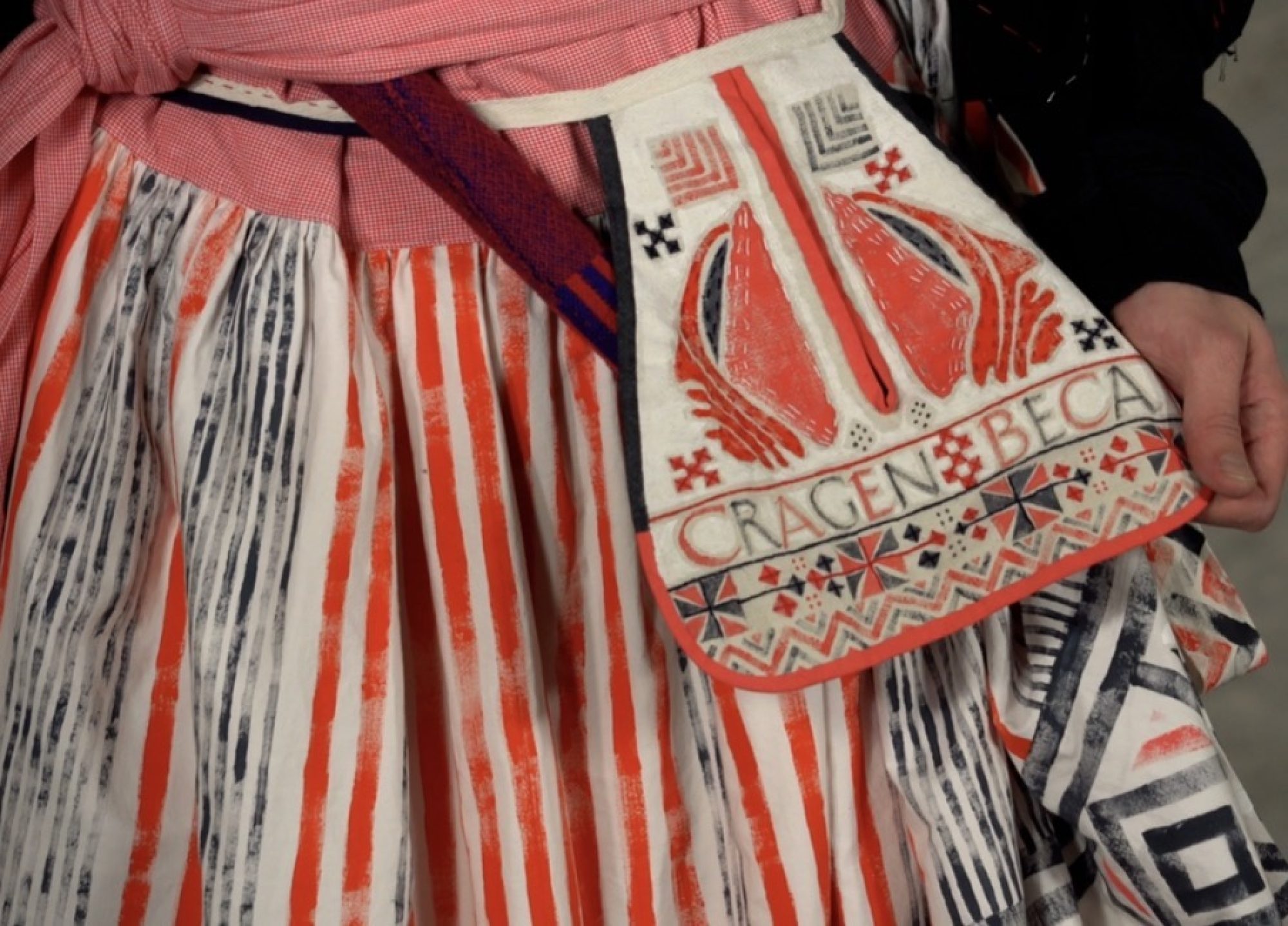
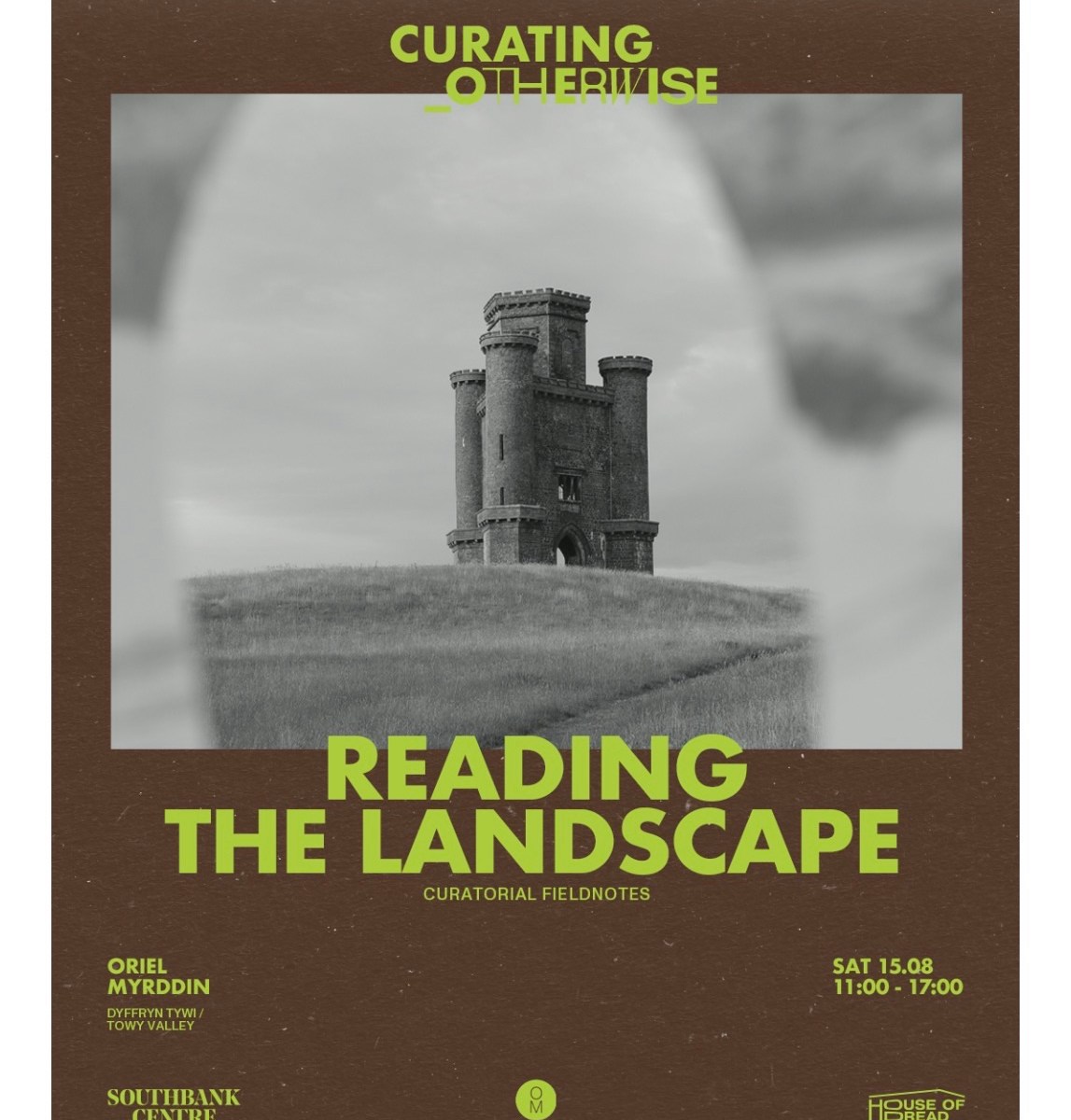
Oriel Myrddin Gallery in Carmarthen asked me to submit a piece of research to their project that has been devised in collaboration with HOUSE OF DREAD and Southbank Centre.
How do landscapes become part of our cultural memory? Who shapes the stories we tell about the places around us, and how might young people begin to curate new relationships with them?
Led by Oriel Myrddin’s Engagement Manager Abby Poulson and local contributors, this Curatorial Fieldnote invited young people between 16 and 30 to explore the Towy Valley as both landscape and archive.
Here’s part if my contribution:
“…My project, Cragen Beca, as well as being a homage to the original Rebecca protestors, was also an experiment to learn if the shell could strike a chord with the people of Carmarthenshire today. I could not blow the original shell as it is now a museum object, but I found another conch shell trumpet in an antique shop in Carmarthen which has become a contemporary version.
The landscape of Carmarthenshire was the battleground of Rebecca and her supporters. I imagined this new Cragen Beca ‘activating’ this same landscape and bringing Rebecca’s spirit to life again.
The word ‘palimpsest’ describes best how I thought about this process.
I imagine the landscape as a palimpsest. In its current form, all the people who have inhabited it, all the animals who have roamed there, all the buildings and structures that have come and gone, all the events, joys and tragedies that have occurred somehow still exist in the layers. They are kind of ghosts of the past that are still active and present in the physical traces and the collective memories of people.
Sometimes, at night, when I drive through the Carmarthenshire countryside, I can almost conjure the Rebeccaites riding through the night in their women’s clothes, bonnets and blackened faces – what a sight!
As part of my project, we took the new Cragen Beca out to the landscape of Talog where the original Cragen Beca had been blown. Musician Ceri Owen Jones blew it in various locations, including a hilltop overlooking the village. In my mind, each blast, as it echoed around the valley, was a new call to action – a reminder that we have the power to resist the things that oppress us. It felt powerful and inspiring to witness …”

